
From pair programming with LLMs to AI-assisted code review, the way we teach and learn software development has fundamentally shifted. Here’s what every CS student and educator needs to know.
Generative AI Computer Science Software Engineering 10 min read
Neural Network
It was only three years ago that computer science professors were debating whether to allow students to use GitHub Copilot. Today the question has inverted: how do you teach students to be better engineers because of AI, not despite it? The shift has been seismic, and the institutions that adapt fastest are already producing graduates that employers describe as “operating at senior-engineer level on day one.”
“The CS graduates who will define the next decade aren’t the ones who memorize syntax. They’re the ones who know how to reason about systems, decompose problems, and direct AI agents to build things neither could build alone.”— MIT Computer Science & AI Laboratory, 2025 Annual Report
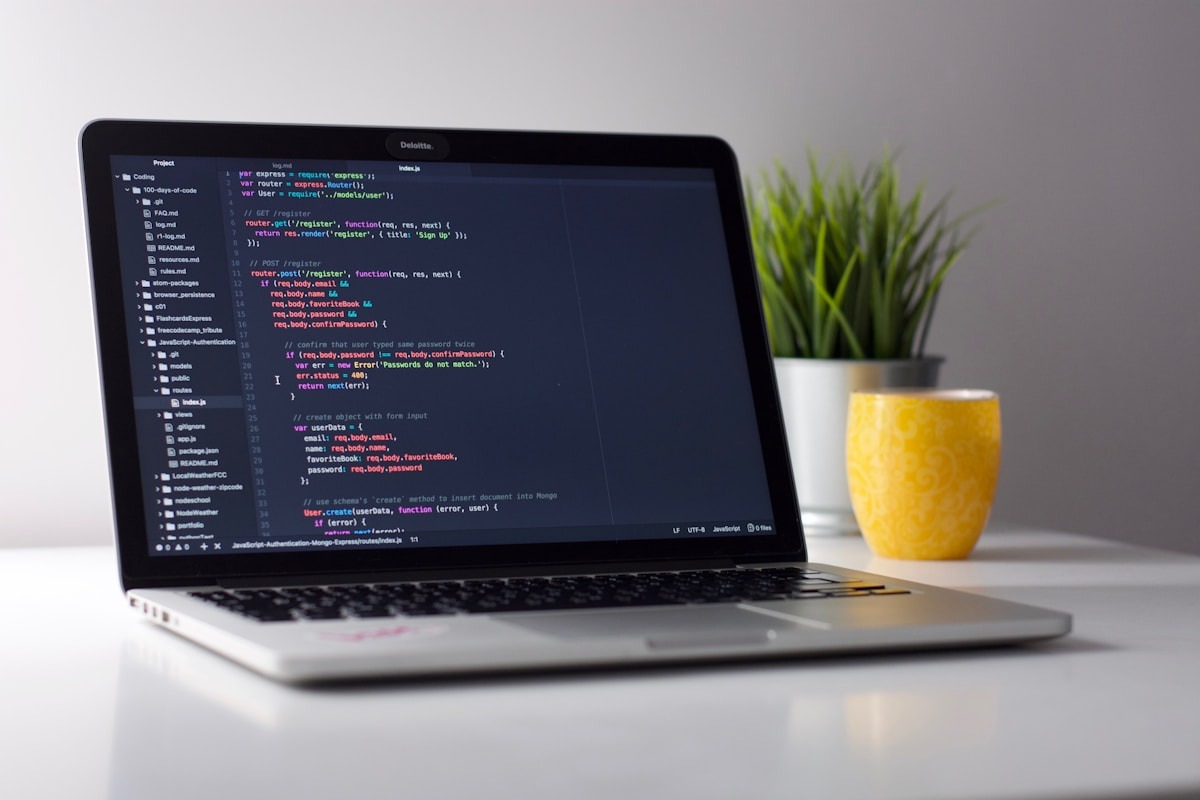
Computer science students in 2026 work alongside AI tools as a standard part of every coding session, not just as an optional add-on.
The Classroom Before and After
The transformation is most visible in introductory programming courses. Where CS101 once spent weeks on syntax and debugging loops by hand, the 2026 version of that course now spends those weeks on computational thinking, system design, and prompt engineering — treating syntax as a layer that AI handles while humans handle the architecture.
Computer science students in 2026 work alongside AI tools as a standard part of every coding session, not just as an optional add-on.
The Classroom Before and After
The transformation is most visible in introductory programming courses. Where CS101 once spent weeks on syntax and debugging loops by hand, the 2026 version of that course now spends those weeks on computational thinking, system design, and prompt engineering — treating syntax as a layer that AI handles while humans handle the architecture.
The Old CS Classroom (Pre-2023)
- Weeks spent debugging syntax errors manually
- Projects measured by lines of code written
- Rote memorization of algorithms and APIs
- Solo coding with no collaboration tools
- Final project = build a CRUD app from scratch
The New CS Classroom (2026)
- AI handles boilerplate; humans design architecture
- Projects measured by problem-solving depth
- Focus on understanding why, not memorizing how
- AI pair programming as a core skill
- Final project = evaluate, extend, and secure an AI-built system
Five Ways Generative AI Is Changing How CS Is Taught
1.
AI Pair Programming is Now a Core Skill
Tools like GitHub Copilot, Cursor, and Claude Code are taught as first-class instruments. Students learn to review AI-generated code critically — checking for security vulnerabilities, edge cases, and architectural smells — rather than accepting output blindly.
2.
Prompt Engineering Has Entered the Curriculum
3.
Assignments Test Understanding, Not Production
Professors are redesigning assessments. Instead of “write a binary search tree from scratch,” the 2026 version is “here is an AI-generated BST — find the three bugs, explain them, and redesign the insert method for thread safety.” Harder, not easier.
4.
Data Literacy is Mandatory at Every Level
Understanding training data, model bias, hallucination, and evaluation benchmarks is now part of introductory CS — not an elective. Every student who graduates should be able to ask: “What was this model trained on, and what can go wrong?”
5.
Ethics is Woven Into Technical Courses
AI ethics is no longer a standalone philosophy elective. Questions about fairness, accountability, and transparency in algorithmic systems are embedded in machine learning, data engineering, and systems design courses.
What a Modern CS Assignment Looks Like?
Below is an example of a 2026-style assignment prompt from a data structures course — showing how AI is incorporated as a tool to work with, not a shortcut to avoid:
Assignment 3 — Evaluating AI-Generated Code
Step 1:
- Use the LLM of your choice to generate a hash table
- implementation in Python with open addressing.
- Include your prompt in your submission.
- class AIGeneratedHashTable: # ← paste AI output here
Step 2:
- Write a test suite that breaks the AI's implementation.
- You must find at least two edge cases it fails on.
- def test_collision_handling():
- # YOUR test logic here — make the AI code fail
Step 3:
- Fix the bugs and document your reasoning.
- Your grade is based on the quality of your analysis,
- not on whether the AI produced correct code first.
The Timeline: How Fast This Happened
The Panic Phase
Universities scramble to update honor codes. Many ban AI tools outright. Cheating detection arms race begins.
The Experiment Phase
Forward-thinking professors begin redesigning assignments around AI. Early adopters discover students actually learn more deeply when forced to evaluate AI output.
The Integration Phase
Major CS programs publish new curricula with AI pair programming as a core competency. GitHub Copilot usage surges past 60% of CS students nationally.
The New Normal
AI-native course design is the standard. Students who cannot direct, evaluate, and extend AI-generated code are considered underprepared for industry.
What Students Should Actually Focus On
🏗️
System Design Thinking
🔐
Security & Trust
📊
Data Reasoning
💬
Technical Communication
⚠️
The Competency Trap
Students who use AI to skip the hard parts of learning programming often find themselves unable to debug when AI fails them which it regularly does on complex, domain-specific problems. Build your fundamentals first. Use AI to go further, not to go around the learning process.
The Computer Science discipline is not being replaced by AI. It is being elevated. The problems that genuinely require a skilled engineer in 2026 are harder, more interesting, and more consequential than the problems of 2020. That is genuinely exciting. The students who embrace that challenge, who learn to think alongside AI rather than leaning on it, are entering one of the most fascinating moments in the history of the field.